BIRDLIME > RESOURCES > OAK IDENTIFICATION > WHITE OAK
White oaks lend their name to their subgenus, adding the possibility of minor terminology confusion in the process. Fortunately, Quercus alba is a fairly easy tree to identify. While its bark at ground level resembles most other subgenus relatives (with the notable exception of chestnut oak), the upper trunks of mature white oaks tend to display exaggerated plate-like bark texture in large pieces not usually seen in other oaks. This is a fairly reliable way to spot Q. alba without having to do too much investigation.
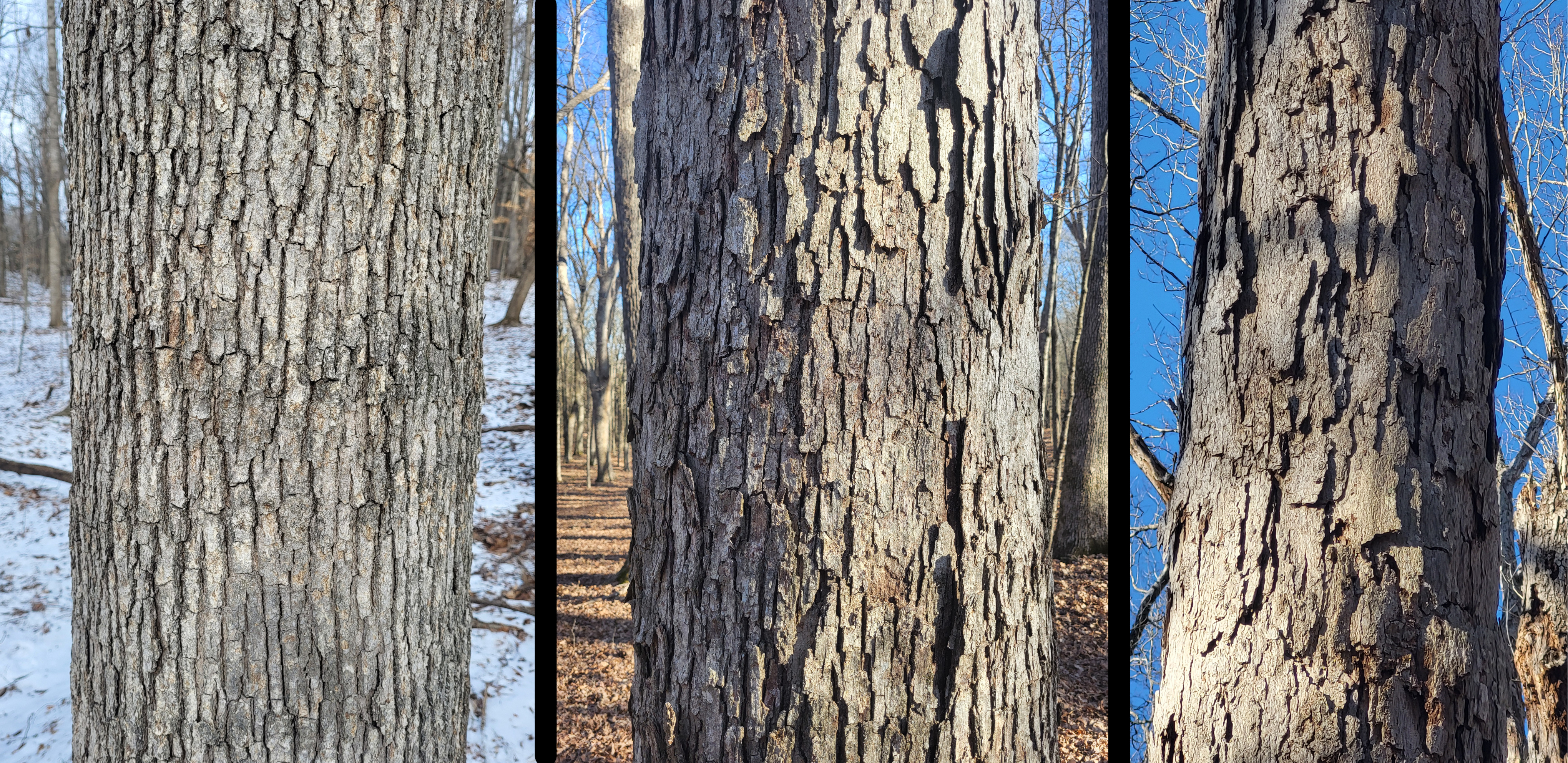
At breast height, Q. alba is generally not distinctive (left). As one's eyes drift up the trunk, however, the bark begins to "lift" away from the wood in larger, blocky plates (middle). This phenomenon is typically most visible further up the tree below the crown (right).
If the plate-like texture is missing, only present on branches, or the tree is simply too young to determine, the acorn may provide another method for confirming this tree. The cupule, in contrast to every other species in the subgenus, is covered in rounded, raised scales. Others may be flatter or have a distinctive “point” at the bottom of the scale – but once inspected, a true white oak cap is pretty hard to mistake for something else.
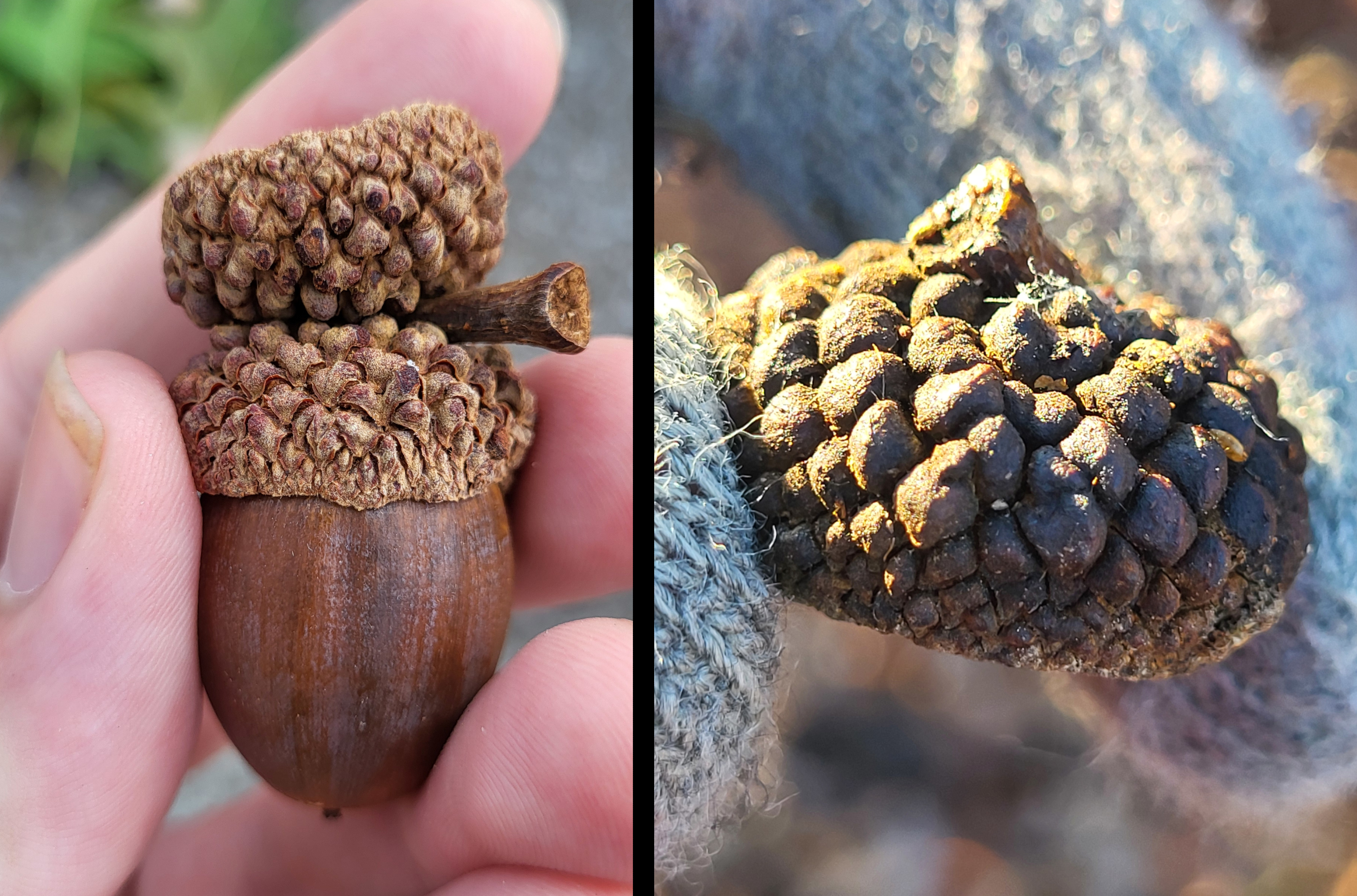
The cupule covers a relatively small portion of the nut, only about a quarter if that. The distinctive rounded scales are best seen on the right. Both of these characteristics set them apart from other white oak acorns, which typically feature flatter, pointier scales or larger cupules relative to the size of their nuts.
The buds of Q. alba do not provide much help, nor does its twig. Leaves, however, may be fairly helpful when present, appearing with rounded, irregularly shaped lobes which can appear like long fingers in between deep sinuses on sun leaves. The lobes, about 7 to 9 in number, bloom asymmetrically of either side of the leaf, lending each one a slightly different character.